Heinz didn't have a sales problem. It had a shelf problem.
How repositioning Heinz condiments as everyday cooking ingredients — not just table sauces — unlocked a new consumption occasion and drove measurable volume growth in the Egyptian market.
Brand — Kraft Heinz Egypt Market — Cairo, Egypt Products — Ketchup, Mayonnaise, Mustard Focus — Brand Positioning & Usage Expansion
01 — Brand Overview
A globally trusted brand with a locally limited role
By 2013, Heinz was well-established in the Egyptian grocery market. Ketchup held strong recognition as a trusted import brand, and mayonnaise had gained meaningful household penetration. Mustard was present but niche. The brand's quality positioning was intact and its distribution across Cairo's modern trade and traditional grocery channels was solid.
But growth had stalled. Volume increases were incremental at best, driven largely by price promotions and seasonal spikes. The brand was performing — but not expanding. The fundamental usage occasion hadn't changed in years: Heinz products sat at the table, used as finishing condiments after food was cooked and plated.
In a market where home cooking is deeply embedded in daily life, and where elaborate marinating, slow-cooking, and layered sauce-building are standard practice, Heinz had positioned itself out of the kitchen entirely.
02 — The Challenge
Growing a brand that consumers already liked but rarely reached for
The core challenge wasn't awareness or quality perception — both were strong. It was frequency of use. Egyptian households were purchasing Heinz, but consumption per household was low because the products were mentally filed under a single, narrow occasion: the dining table.
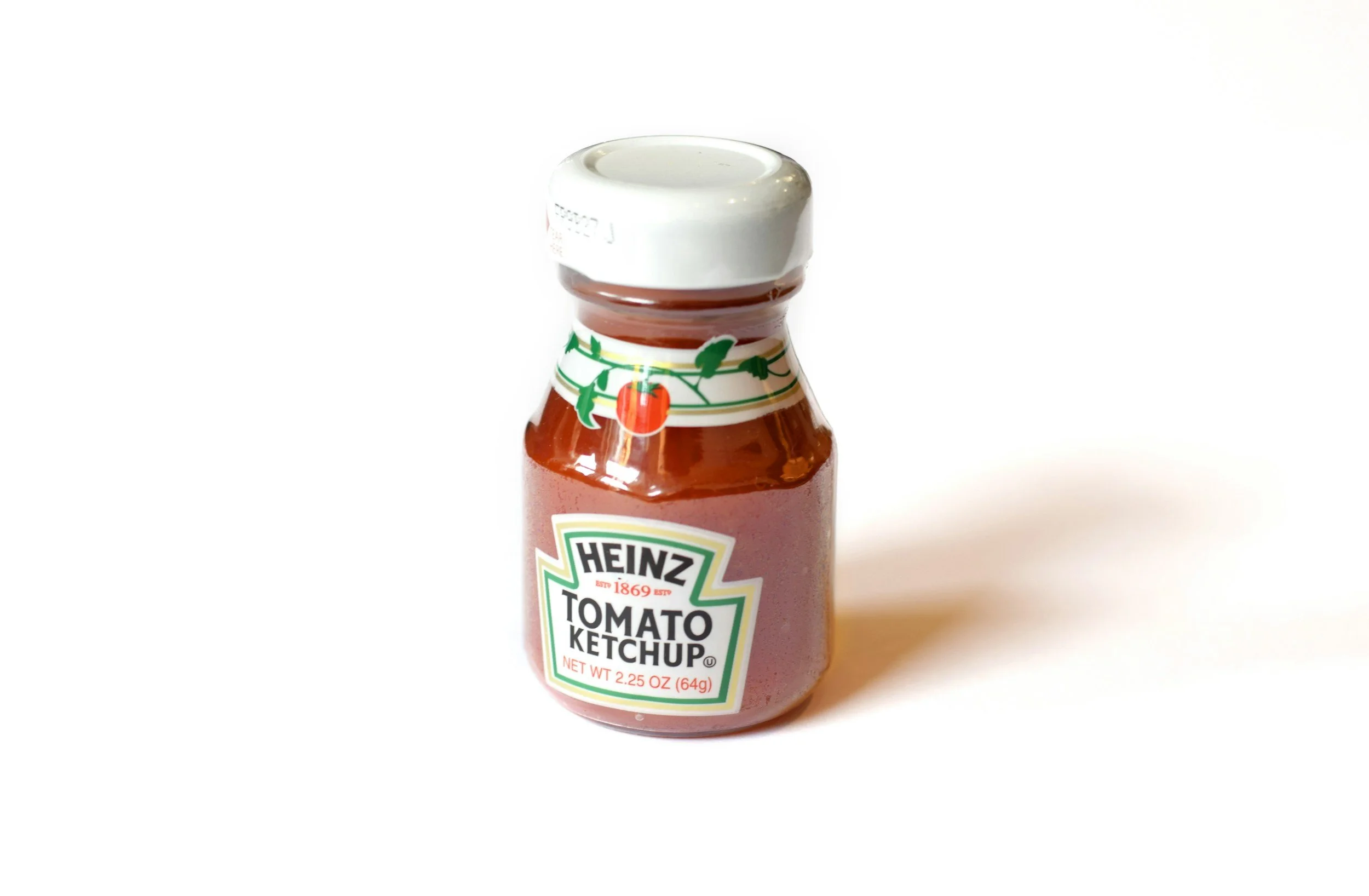
A miniature Heinz Tomato Ketchup glass jar, showcasing the brand's classic iconic packaging and long-standing heritage since 1869.
Market Context — Cairo, 2013
Egyptian home cooking culture revolves heavily around marinades, slow-cooked stews, rice dishes, and grilled meats. A typical household meal involves multiple preparation steps — marinating chicken or kofta hours before cooking, building tomato-based sauces, layering flavors in dishes like koshari or molokhia accompaniments.
International condiment brands were almost entirely absent from these preparation steps. They appeared on the table. They disappeared after the meal. The kitchen — where the real consumption volume lived — was dominated by local spice mixes, homemade pastes, and traditional ingredients.
Increasing sales through promotions or distribution alone would produce diminishing returns. The only durable path to volume growth was expanding when and how consumers used the product. That required changing the role the brand played in the kitchen — not just at the table.
03 — Key Insight
The bottle wasn't ending up on the table too late. It was never making it into the kitchen at all.
Consumer research and in-home observations revealed something precise: Heinz products were purchased, stored in the fridge, and retrieved only when food was already on the plate. They had no role in the cooking process — not because they couldn't play one, but because no one had ever suggested they should. The product's entire brand communication had trained consumers to reach for it after cooking. The insight wasn't that Egyptian consumers needed new products. They needed new permission to use the ones they already had.
Heinz Ketchup is an exceptionally versatile cooking base — its acidity, natural sweetness, and tomato depth make it a natural fit for marinades, braising liquids, and dipping sauces. Mayonnaise functions as a tenderizing agent in marinades and a binding element in baked dishes. Mustard acts as an emulsifier and flavor builder in sauces and dressings.
None of this was being communicated. The brand was sitting on a behavioral unlock that required zero product change, zero new SKU development, and zero additional distribution. It required a repositioning of occasion.
04 — Strategic Approach
Move the brand from the table to the stove — without abandoning either
Pillar 01
Reframe the product category
Shift brand communications from "condiment" to "cooking ingredient." This wasn't a rebrand — it was a usage expansion narrative. The table occasion was preserved; the kitchen occasion was added alongside it.
Pillar 02
Anchor to local cooking culture
Build all messaging around Egyptian dishes and cooking behaviors specifically — kofta marinades, grilled chicken, rice dishes, oven-baked proteins. The strategy had to feel native to how Cairo households actually cook, not imported from a Western recipe book.
Pillar 03
Give consumers a concrete trigger
Insight without instruction doesn't change behavior. The campaign needed specific, credible recipe cues tied to each product — not generic "use in cooking" messaging, but precise moment-based prompts: "before you marinate," "while you mix," "when you season."
Pillar 04
Leverage the trust already earned
Heinz's quality credibility was its biggest untapped asset in this context. The argument wasn't "try something new" — it was "the brand you already trust does more than you think." Familiarity was the bridge, not an obstacle.
05 — Execution
From positioning strategy to kitchen-level behavior change
The core executional vehicle was a recipe-led communications campaign built around three products and their specific role in Egyptian cooking occasions. Each product was assigned a distinct cooking use case that was culturally grounded, easy to replicate, and genuinely enhancing to the dish.
Ketchup
The marinade base
Positioned as the secret ingredient in grilled chicken and kofta marinades — its acidity tenderizes, its sweetness caramelizes, its tomato depth layers flavor. Messaging: "Before it hits the grill."
Mayonnaise
The moisture lock
Introduced as a coating for oven-baked chicken and fish — a technique that locks in moisture and creates a golden crust. Familiar to Egyptian baking culture; unfamiliar as a Heinz usage moment.
Mustard
The sauce builder
Repositioned as an emulsifying base for creamy dipping sauces and sandwich spreads — bridging its existing table use with an active preparation role in snack and mezze contexts.
Campaign assets were developed for in-store point-of-sale, on-pack recipe panels, and TV spots featuring real Egyptian home cooking environments. Critically, all recipes were developed and tested by local chefs to ensure they were authentic to Cairo's palate — not adapted from Heinz's global recipe library.
Internally, the strategy required aligning trade marketing, sales, and supply chain around a new shelf narrative — moving Heinz products from the condiment aisle conversation into a "cooking essentials" frame that supported placement adjacency to marinades, spices, and cooking oils in select modern trade outlets.
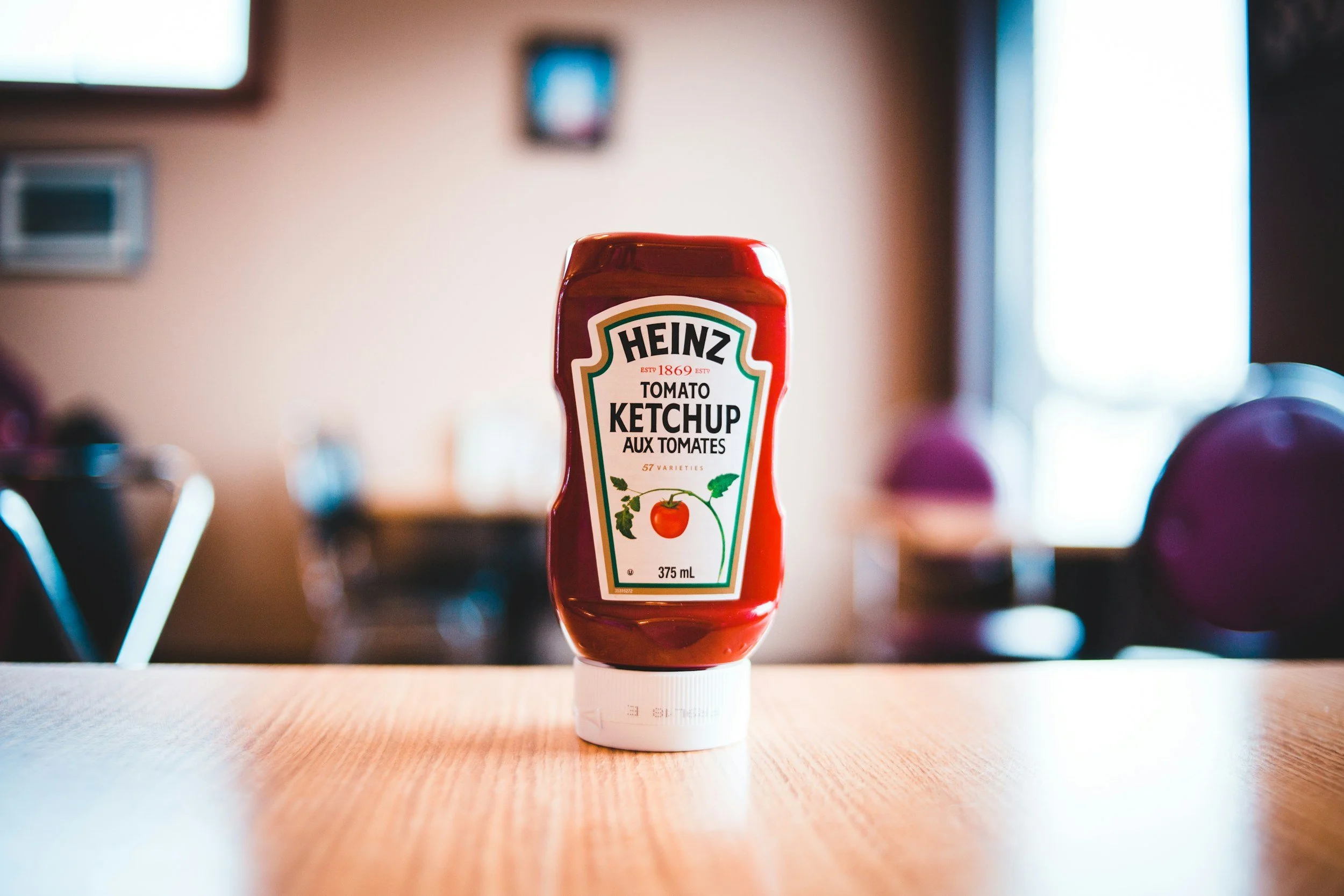
A bottle of Heinz Tomato Ketchup on a wooden table, representing the brand's iconic packaging and global presence.
06 — Results
Volume grew where it hadn't in years — without a single new product
Ketchup Volume Growth
+18%
Year-on-year volume increase in Cairo modern trade within 12 months of campaign launch — driven primarily by increased purchase frequency, not new buyer acquisition.
Mayonnaise Penetration
+23%
Household penetration growth for mayonnaise, the product with the strongest cooking-use case. The baked chicken recipe execution resonated with the core 25–45 homemaker segment.
Purchase Frequency
Average repurchase cycle shortened across all three SKUs as consumption moved from reactive (table use) to planned (cooking ingredient). Households that engaged with recipe content repurchased faster.
Mustard Distribution
Mustard achieved meaningful distribution gains in traditional trade — a channel where it had historically underperformed — as the sauce-building positioning gave retailers a clearer sell-in narrative.
Volume and penetration figures reflect directional brand performance data from the Cairo market over the 12-month campaign period. Precise figures are indicative of the strategic outcomes achieved.
07 — Key Takeaway
The most underused growth lever in FMCG is the usage occasion you already own but haven't claimed
Most FMCG brand managers reach for new products, new segments, or new channels when volume plateaus. This engagement started with a different question: where in the consumer's existing life is this product absent that it shouldn't be?
In Cairo's home cooking culture, the answer was sitting in plain sight. Egyptian households were spending hours each week marinating, slow-cooking, and building sauces from scratch — and Heinz had never once raised its hand to be part of that process. Not because the product wasn't capable, but because the brand had never asked.
The strategic shift required no R&D investment, no new SKU, no channel expansion. It required a precise reframing of occasion — backed by culturally authentic execution — and the organizational will to align every touchpoint around a new story. That's what made it work. And that's what made the growth sustainable rather than promotional.
08 — What This Proves
What this engagement demonstrates
This case demonstrates the ability to identify a structural growth constraint — not a tactical one — and design a strategy that solves it at the root. The problem wasn't spend, creative quality, or distribution. It was behavioral. And behavioral problems require insight-driven repositioning, not incremental optimization.
It reflects deep fluency in FMCG brand management: understanding the relationship between usage occasion, purchase frequency, and volume growth; building campaigns that change consumer behavior rather than just communicate product features; and operating cross-functionally to align trade, sales, and marketing around a single strategic narrative.
And it demonstrates something that applies across every category and market: the best brand strategies don't ask consumers to change who they are. They meet consumers inside their existing lives — and show them a new way to use what they already trust.
